FAQ – Everything you need to know about Epitech Benin
Answers to the most frequently asked questions about the school, its teaching method and its programs.
Before exploring the different programs offered by the school, it is important to understand what Epitech is and what makes its teaching model unique.
Epitech is a school specialising in training for careers in computing and technology. Its approach is built on an innovative teaching method centred on hands-on practice, problem-solving and student autonomy.
The questions below will help you better understand Epitech's vision, teaching method and professional approach, before discovering the specific features of each program.
Discover Epitech on video
Understanding the Epitech teaching method and model
What is Epitech?
Founded in 1999, Epitech is a French school specialising in training for careers in computing, software development and technological innovation.
The school trains people who can design, develop and lead complex technology projects in fields such as software development, cybersecurity, data, cloud and artificial intelligence.
Present in several countries through 20 campuses, including Cotonou and Abidjan in Africa, Epitech relies on a recognised teaching method that emphasises hands-on practice, autonomy and the ability to keep learning throughout one’s career.
What is Epitech’s teaching method?
Epitech’s teaching method is based on project-based learning, often called learning by doing.
Rather than mainly attending theoretical lectures, students learn by working on concrete projects, in teams or on their own.
This approach develops skills that are essential for careers in technology:
- the ability to solve complex problems
- autonomy in learning
- teamwork
- adaptability to technological change
Students are thus trained to become professionals who can learn quickly and adapt to new technologies
What is the difference between Epitech and a traditional university?
The main difference lies in the learning method.
In a traditional university model, teaching is often based on theoretical lectures, exams and a structured academic framework.
At Epitech, learning is centred on:
- intensive hands-on software development
- real projects
- solving technical problems
- student autonomy
Students therefore spend much of their time designing, developing and improving software projects, in conditions close to those of the professional world.
Why learn to code at Epitech?
Code is now at the heart of many economic and technological transformations.
Learning to code builds highly sought-after skills in many sectors: technology, finance, industry, healthcare, retail and digital services.
At Epitech, learning to code goes beyond mastering a programming language. Students also learn to:
- understand complex computer systems
- design innovative technology solutions
- work on collaborative projects
- adapt quickly to new technologies
The goal is to train developers who can solve real-world problems and build useful solutions for businesses and society.
What role do companies play in the training?
The link with companies is a central part of the training at Epitech.
Students regularly work on projects close to real professional situations, which allows them to develop skills that apply directly in the workplace.
Depending on the program, students can also benefit from:
- internships in companies
- work-study periods
- collaborations with partners in the technology sector
Choose your program to see its frequently asked questions:
The Programme Grande École (PGE)
A 5-year computer science program open to high school graduates, to become an Information Technology Expert.
Useful links and information — Programme Grande École
- The academic year starts on 7 September 2026.
- The admission process will take place between June and August 2026, subject to the number of places available.
- To be notified in real time when applications open: subscribe to our WhatsApp channel.
- For any question, contact us directly on WhatsApp at +229 59 08 56 05.
- To start your admission process: apply online.
- Download the PGE brochure (PDF, 13 MB) →
What is Epitech’s Programme Grande École?
Epitech’s Programme Grande École is a 5-year computer science program open to high school graduates. It prepares students for the most sought-after jobs in the sector and trains professionals who are immediately operational, able to build a career in Benin as well as internationally.
Why choose the Programme Grande École?
Digital technology is today one of the most dynamic sectors in Africa. It is transforming finance, healthcare, education, agriculture, public administration… This transformation creates a huge need for professionals able to design and build the technical solutions that make it possible.
The Programme Grande École meets this need by training computing experts who are operational and ready to take on the technical challenges of local companies, startups, banks, institutions and international organisations. Training in this field means choosing a promising, lasting sector.
What kind of computing do you learn in the Programme Grande École?
The Programme Grande École mainly trains students for software development careers, that is, building software, applications, web platforms and digital solutions. Students learn to code, design computer systems and solve complex technical problems.
Which areas of computing does the Programme Grande École cover?
The Programme Grande École covers a broad spectrum of computing, with a strong focus on software development – programming being our core expertise.
Students first build solid foundations in algorithms and core languages, before exploring many fields through concrete projects in:
- Artificial intelligence & data
- Cybersecurity (application security, secure development)
- Software architecture
- Web and mobile development
- Cloud computing
Do you need to know how to code before joining the program?
No. No technical prerequisites are required.
The program is designed to support students from the very beginning.
How is the program structured year by year?
The Programme Grande École is built over 5 years, with a learning progression that moves from fundamentals to deeper knowledge and specialisation.
- 1st year: Learn the basics → Algorithms, core languages (C, Haskell), discovery of technical environments
- 2nd year: Master development → Object-oriented programming, web development, project management
- 3rd year: Deepen and structure → Software architecture, databases, first large-scale projects
- 4th year: Explore and specialise → Artificial intelligence, cybersecurity, cloud, international mobility
- 5th year: Become an expert → Major of your choice, final-year project, immersion in a company
Does the Programme Grande École offer the opportunity to study abroad?
Yes, the Programme Grande École offers international mobility:
- The first 3 years take place in Cotonou.
- The last 2 years take place abroadTrack A: 4th & 5th year at Epitech ParisTrack B: 4th year at one of 120 partner universities worldwide, then 5th year in Paris
What degree is awarded at the end of the program?
The Programme Grande École offers a progressive, degree-awarding pathway:
After 3 years: a 3-year degree (BAC+03) accredited by the Beninese State.
After 5 years: a double 5-year degree (Bac+5 level):A Diplôme d'Expert en technologies de l'information (Information Technology Expert degree), approved by the French Ministry of Higher Education and Research.A Titre d'Expert en ingénierie logicielle (Software Engineering Expert certification), registered in the RNCP at level 7 (recognised by the French State).
Epitech degrees are not subject to the CAMES system, as they are part of a professional certification model recognised by the French State and geared towards international employability.
How much does the program cost and are payment plans available?
Tuition fees are:
Cotonou campus
- 1st year: 2 650 000 FCFA
- 2nd year: 2 650 000 FCFA
- 3rd year: 2 800 000 FCFA
Payment in three instalments is possible each year.
These fees cover all classes, access to learning resources and individual student follow-up. Only the computer is at the student’s expense.
International mobility
- Fees for years 4 and 5 amount to a minimum of 10 840 euros per year.
- An additional cost may apply depending on the country and campus selected. The exact terms are communicated when the destination is chosen.
- Travel costs for the 4th and 5th year are entirely borne by the parents. However, the school supports families with all the administrative procedures related to the student’s relocation (required documents, guidance, confirmations, etc.), to make the process easier and ensure a stress-free journey.
Who can join the Programme Grande École?
The Programme Grande École is open to anyone holding a high school diploma (Baccalauréat, any stream) or an equivalent qualification, with no prior specialisation in computing required
What is the admission process for the Programme Grande École?
Admission test
- Logic test: this test measures your reasoning, analytical and problem-solving skills, which are essential in digital careers.
- English test: we assess your command of the language, your ability to read, understand and use English, which is essential to succeed in our programs.
Admission interview
- Interview fee: 30 000 Fcfa
- Motivation and English interviews: the first assesses your motivation, your career plans and how well you fit the Epitech teaching method; the second looks at how comfortable you are in English (reading, speaking, comprehension).
Administrative file
- Certified copy of proof of passing the Baccalauréat (high school diploma)
- Proof of residence
- Copy of a valid identity document
Enrolment contract and tuition
- Signing of the enrolment contract
- Deposit of 1 000 000 Fcfa
Do you need a computer to study at Epitech Benin?
Yes, a laptop is an essential tool at Epitech Benin. As the teaching method is based on hands-on practice, project development and independent work, each student must have their own computer to code, test and complete the various projects of the program. You are free to buy your computer wherever you like, either on your own or from our partner, reachable at 0196235965
Minimum requirements
- Type: standard “personal computer” laptop
- Processor: Core I5 – 8th generation minimum
- RAM: 8 GB
- Hard drive: 512 GB SSD
- WiFi card: Wifi5(ac) or Wifi6(ax)
- Screen: Full HD (1920×1080)
- Webcam
- HDMI / USB port
What payment methods are available for tuition fees?
Tuition fees can be paid by bank deposit or via Mobile Money
Orabank
Biic
Momopay
88041*691724*Amount#
What jobs can you get after the program?
More than ever, Tech is THE field of the future, whatever career you dream of. With the rapid evolution of technology and the growing need for digital skills, some computing jobs are particularly in demand.
Companies are looking for professionals able to meet specific challenges, whether in cybersecurity, artificial intelligence, software development or data science. A wide range of jobs and sectors opens up to you once you graduate from our computer science school.
Software architect
A software architect is to a company’s information system what a traditional architect is to a building: a designer of structures. They help organise the components of a computer system and choose the right technology solutions to make it evolve. The software architect maintains the technical consistency of the information system, from its creation and throughout its evolution, while meeting the needs of the company in which the system operates.
Lead Developer
Also known as a programmer, a software developer designs and evolves software, websites or any other solution based on writing code. They meet a company’s needs as set out in a specification, analysing them and then developing the appropriate program. The developer works on a site’s design and compatibility (the front-end), its security and robustness (the back-end), or all of these areas (full stack).
Cybersecurity expert
Computer attacks (or cyberattacks) have become common and widespread, coming from hackers as well as public or private organisations. They pose a serious threat to companies, which must protect themselves if they do not want to risk losing control of their IT system, losing their strategic data or the sensitive data of private individuals, or losing a lot of money (for example when business comes to a halt). The cybersecurity expert is the specialist who ensures the protection, reliability and safety of the IT system, and who handles regulatory issues such as data privacy.
Data Scientist
Data is often called the black gold of the 21st century. It has become essential at every level of a company’s activity, because it supports decision-making as well as operations, and because it is the source of information systems. But for data to make a company more efficient, the data must be extracted and qualified, its value validated, and so on. The Data Scientist is the expert who extracts, from the huge volume of raw data available (Big Data), the data that best serves the company’s activities.
Database administrator
Database administrators manage companies’ databases, ensuring their availability, performance and security. In the age of Big Data, this is a key role in information systems.
Artificial Intelligence analyst
With the rise of AI, companies are looking for Artificial Intelligence analysts to develop machine learning and AI models that solve business problems
DevOps engineer
DevOps sits at the crossroads of two functions that are traditionally separate in the IT world: developer and system administrator. As a developer, they build applications and websites according to the needs identified by a company. As a system administrator, they handle the deployment and operation of these solutions, making them responsible for their smooth running.
Cloud Computing engineer
The cloud has accelerated companies’ digital transformation by simplifying the dematerialisation of many activities. It is now common for them to store their data off-site. However, data security, access and management remain major challenges for companies. The Cloud Computing engineer is the specialist in charge of storing and operating data in these external data centres.
Automation and Robotics expert
Companies are looking for experts able to automate processes and deploy robots in various fields, from manufacturing to logistics, and to ensure they run smoothly.
Systems & network manager
Sometimes holding an engineering degree, the systems and network manager is responsible for installing and maintaining the hardware and software integrated into a company’s network operating system. They meet equipment needs so that the members of an organisation can work efficiently with the best system and network connections.
Chief Technical Officer
The CTO (Chief Technical Officer), sometimes known as Director of New Technologies, oversees technical innovation and R&D (Research and Development) in a company. They choose technology solutions that fit an organisation’s activities and needs, and are also responsible for their deployment and smooth operation. The CTO therefore holds a strategic position: working closely with senior management, they make sure the company’s needs are met with the most effective technology solutions.
Chief Data Officer
In the business world, data is now at the heart of major strategic, operational and regulatory challenges. To address them, companies rely on the Chief Data Officer: the person responsible for managing the company’s data throughout its life cycle. They contribute to an organisation’s digital transformation by managing data governance. In other words, they define the principles and rules for using data to improve its quality and to ensure the company complies with the law (in Europe, notably with the GDPR: General Data Protection Regulation).
XR (Extended Reality) developer
Extended reality covers all the technologies used to simulate environments digitally. Their degree of immersion varies and their applications are often specific. The XR (extended reality) developer is the person who programs virtual reality, augmented reality or mixed reality applications. First driven by video games, this job is now spreading to many other sectors.
IT project manager
Implementing an IT solution often involves very diverse teams. The IT project manager is the person who manages technology deployment projects from end to end, from analysing a company’s technical needs to delivering a specific IT product. They coordinate stakeholders and make the right decisions to ensure the quality of the IT solution, while meeting the deadlines and budget set at the start of the project.
Geomatics specialist
The geomatics specialist resembles the geographer in one respect: they are a specialist of territories. Their main role is to collect spatial and geographic data for organisations, to help them make decisions in land-planning projects such as siting a building, building a road or identifying flood-prone areas. The geomatics specialist works in the early phases of these projects, in a wide variety of sectors (construction, environment, architecture, transport, urban planning, energy, telecoms…), for local authorities, public bodies or companies.
IT consultant
An IT consultant is a professional whose main mission is to provide IT consulting services to companies or organisations. Their role is to help clients solve IT problems, improve their technology infrastructure, optimise their processes, select suitable software or hardware, and provide recommendations to achieve specific IT goals. IT consultants are versatile experts who can work on various projects, such as systems implementation, cybersecurity, project management, data analysis, e-commerce and many more, depending on their clients’ needs.
Where is Epitech’s campus in Benin?
Epitech is located in a beige building opposite the Saint Michel church in Cotonou
Does Epitech offer merit scholarships?
Epitech Benin awards merit scholarships following a competition reserved for candidates who passed the current year’s Baccalauréat (high school diploma) with the highest honours (mention Très Bien).
Participation terms and award criteria are announced after the Bac results
Is the program available as evening classes or online?
No, the Programme Grande École is an on-campus, full-time program and does not offer a distance-learning or evening format. This on-campus model is at the heart of Epitech’s project-based teaching method, which relies on teamwork, peer support and total immersion to develop students’ autonomy and technical expertise
Master of Science (MSc)
A 2-year career-focused program (5-year degree level) offered as work-study, to specialise in a strategic field of computing.
Useful links and information — Master of Science
- The academic year starts on 18 January 2026.
- The admission process will take place between September and December 2026, subject to the number of places available.
- To be notified in real time when applications open: subscribe to our WhatsApp channel.
- For any question, contact us directly on WhatsApp at +229 59 08 56 05.
- To start your admission process: apply online.
- Download the MSc brochure (PDF, 12 MB) →
What is Epitech’s Master of Science?
Epitech’s Master of Science is a 2-year career-focused program (5-year degree level), offered as work-study, for students who want to specialise in a strategic field of computing while gaining hands-on experience in a company. It leads to a high-level degree focused on professional expertise and fast entry into the job market.
Why do Epitech’s Master of Science?
Epitech’s Master of Science is a 5-year degree level program that combines technical expertise in computing with professional experience in a company.
The program is offered as work-study, with a schedule adapted to companies’ needs: students alternate between periods in the company and training time at school (usually 3 weeks in the company and one week at Epitech, except during intensive periods called piscines – a 3-week intensive bootcamp).
The teaching method is based on project-based learning and solving concrete problems. Students thus develop sought-after skills in fields such as software development, cybersecurity, data, cloud and artificial intelligence.
This approach provides both solid technical expertise and significant professional experience, making it easier to enter the job market.
Which Master of Science programs are available at Epitech?
Epitech offers four Master of Science programs in the following specialisations:
- Artificial Intelligence
- Big Data
- Cybersecurity
- Cloud
What are the objectives and target skills of this program?
Epitech’s Master of Science aims to train experts able to design, deploy and manage advanced information systems, with a command of the technical, methodological and strategic issues related to technology.
Program objective
During the program, students develop in particular the following skills:
- Design, deploy and manage technology, digital and business projects within companies
- Become an expert in their specialisation, able to update their knowledge and skills throughout their career
- Work and communicate in an international environment, notably through a command of technical English
- Develop management skills: project management, team management, process organisation and quality control
Each Master of Science also has specific objectives related to the chosen specialisation, in addition to the skills common to all MSc programs.
Target operational skills
By the end of this program, students are able to:
Design and development
- Design, build and maintain a company’s applications.
- Create, document and evolve the technical architecture of an application, a software environment or a website.
- Define and design robust, scalable technical solutions tailored to business needs.
Analysis and engineering
- Analyse the functional, technical and strategic needs of a client or organisation.
- Propose innovative solutions suited to performance, security, cost and scalability constraints.
Project management
- Organise, plan and deliver digital services or products using agile methods.
- Oversee the development, integration, deployment and security phases.
Communication and professional environment
- Work effectively in a team and communicate with technical and non-technical stakeholders.
- Understand and communicate in English, including in a technical context.
What are the admission requirements?
Epitech’s Master of Science is open to holders of at least a 3-year degree in computing, information systems or an equivalent discipline (development, networks, systems, data, etc.). They must also have a solid technical foundation.
You do not need to be an expert, but prior experience in programming and computing is required, as the program aims to deepen and specialise skills already acquired, in particular:
- mastery or understanding of at least one programming language (for example: Java, Python, C or C++);
- basics in software design and development;
- initial knowledge of system architectures, network infrastructure, virtualisation or cloud;
- a technology background that makes it possible to tackle complex IT projects within the Master of Science.
Does the Master of Science offer the opportunity to study abroad?
International mobility is not offered as part of the Master of Science. The program takes place entirely on the home campus for both years.
What degree is awarded at the end of the program?
At the end of the Master of Science at Epitech, you obtain a level 7 Titre d’Architecte de Systèmes d’Information (Information Systems Architect certification, equivalent to a 5-year degree), registered in the Répertoire National des Certifications Professionnelles and recognised by the French State (RNCP code 38114).
How much does the program cost and are payment plans available?
Tuition fees are:
1st year: 3 300 000 FCFA
2nd year: 3 300 000 FCFA
- Payment in three instalments is possible each year.
- Tuition includes the immersion trip in the 2nd year.
- The computer is at the student’s expense.
What is the admission process for the Master of Science?
This process ensures that candidates have the appropriate technical and methodological level, as well as a clear motivation to move into expert and information systems architecture roles after the Master of Science.
Admission test
- Technical test: this test assesses the candidate’s technical skills and logic to make sure they have the level needed to follow the program.
- English test: we assess your command of the language, your ability to read, understand and use English, which is essential to succeed in our programs.
Admission interview
- Motivation and English interviews: the first assesses your motivation, your career plans and how well you fit the Epitech teaching method; the second looks at how comfortable you are in English (reading, speaking, comprehension).
Administrative file
- Certified copy of your bachelor’s degree (Licence) certificate in computing
- Proof of residence
- Copy of a valid identity document
- Curriculum vitae
- Professional photo
Enrolment contract and tuition
- Signing of the enrolment contract
- Deposit of 1 650 000 Fcfa
Do you need a computer to study at Epitech Benin?
Yes, a laptop is an essential tool at Epitech Benin. As the teaching method is based on hands-on practice, project development and independent work, each student must have their own computer to code, test and complete the various projects of the program. You are free to buy your computer wherever you like, either on your own or from our partner, reachable at 0196235965
Minimum requirements
- Type: standard “personal computer” laptop
- Processor: Core I5 – 8th generation minimum
- RAM: 8 GB
- Hard drive: 512 GB SSD
- WiFi card: Wifi5(ac) or Wifi6(ax)
- Screen: Full HD (1920×1080)
- Webcam
- HDMI / USB port
What payment methods are available for tuition fees?
Tuition fees can be paid by bank deposit or via Mobile Money
88041*691724*Amount#
Is the program available as evening classes or online?
No, Epitech’s Master of Science is an on-campus, full-time program and does not offer a distance-learning or evening format. This on-campus model is at the heart of Epitech’s project-based teaching method, which relies on teamwork, peer support and total immersion to develop students’ autonomy and technical expertise
Where is Epitech’s campus in Benin?
Epitech is located in a beige building opposite the Saint Michel church in Cotonou
What jobs can you get after the Master of Science?
Epitech’s Master of Science prepares students for expert, design and technology project management roles. Graduates access positions of high responsibility in information systems architecture, advanced development, cybersecurity, cloud, data or software engineering.
Thanks to a project-oriented teaching method and work-study, students benefit from fast and lasting graduate employment.
Main career paths and target jobs
Depending on their specialisation and experience, graduates can hold the following positions:
Architecture & software engineering
- Information Systems Architect
- Cloud Architect / DevOps Architect
- Software Architect
- Senior Software Engineer (Java, Python, C/C++, etc.)
Data, AI & intelligent systems
- Data Scientist / Data Engineer
- Machine Learning Engineer
- Distributed systems expert
Cybersecurity & infrastructure
- Cybersecurity Expert / Security Analyst
- Systems & Network Engineer
- Chief Information Security Officer
Technology management & innovation
- Tech Lead / Lead Developer
- Architecture or digital transformation consultant
- Technical project manager / IT Project Manager
- Product Owner or Technical Product Manager
Sectors
Graduates work in a variety of environments:
- IT services companies (ESN / SSII),
- software publishers,
- tech startups,
- industrial companies and large groups,
- specialised IT consulting firms,
- intech, healthtech, cybersecurity, cloud providers, etc.
Career prospects
After a few years of experience, graduates can move on to roles such as:
- Enterprise Architect,
- Lead technical expert,
- Lead Architect,
- CTO / Technical Director,
- Head of Innovation / R&D.
- PhD in computer science
How do students find their work-study company?
Epitech supports students in their search for a company, in particular through advice, preparation workshops (CV, interviews, professional attitude) and introductions to partner companies.
However, as in most work-study programs, finding a company remains an active process for the student. This approach develops important skills for professional life, such as autonomy, self-presentation and seeking out opportunities.
In addition, if a student already has contacts in a company likely to host them for work-study, they can put the school in touch with it in order to formalise the partnership and work-study arrangement.
The school may also share offers from companies interested in the program’s student profiles.
OUR PROGRAMS
< Programs for every ambition. />
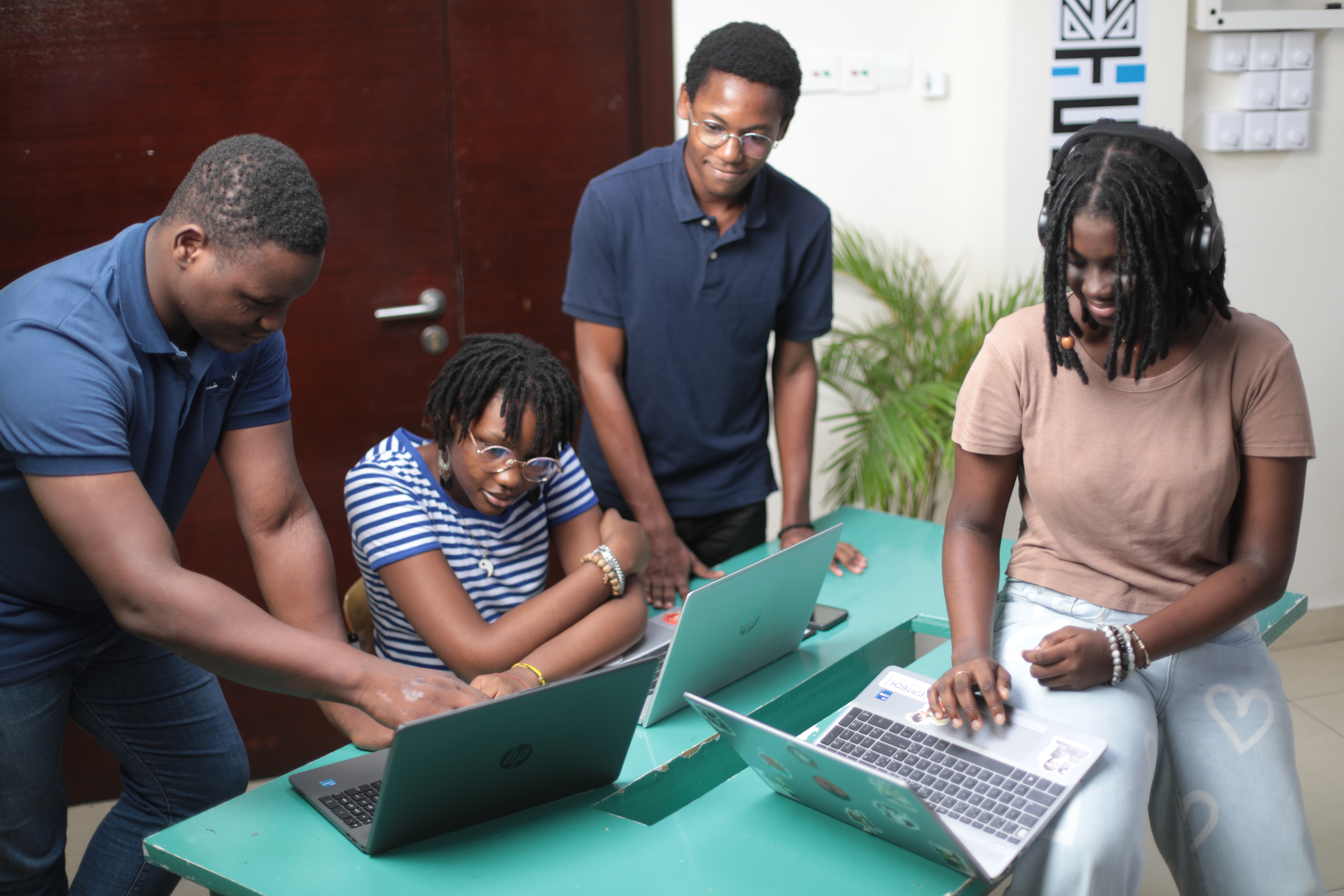
High school diploma → 5-year degree
Programme Grande École
The program rooted in Africa and open to the world
5 years to become an Information Technology Expert. Concrete projects from day one, an internationally recognised degree, 95% graduate employment.
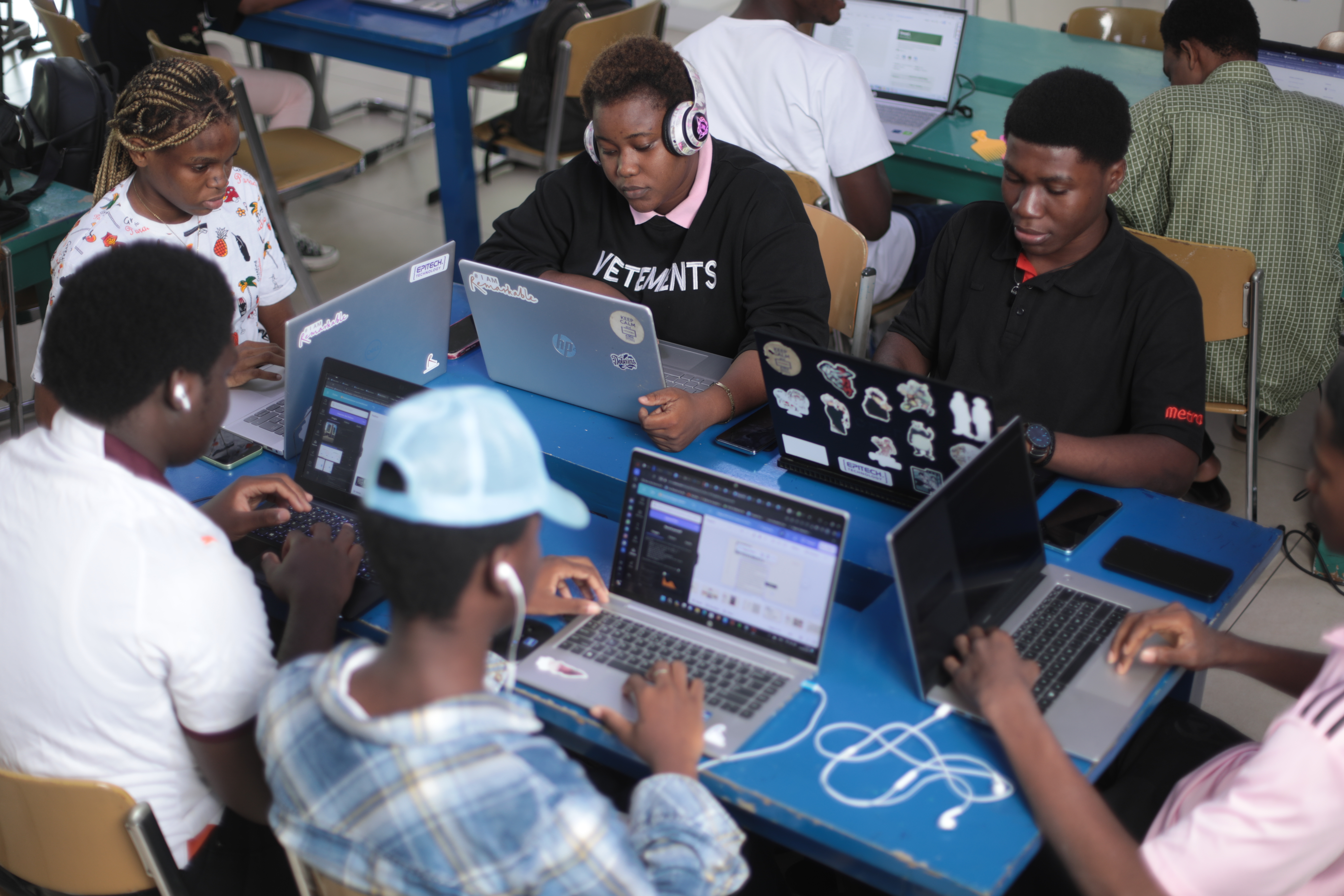
3-year degree → 5-year degree
MSc Pro
A work-study track to boost your tech career
Do you have a 2-year or 3-year degree? 4 work-study specialisations to gain the tech skills most sought after by companies.